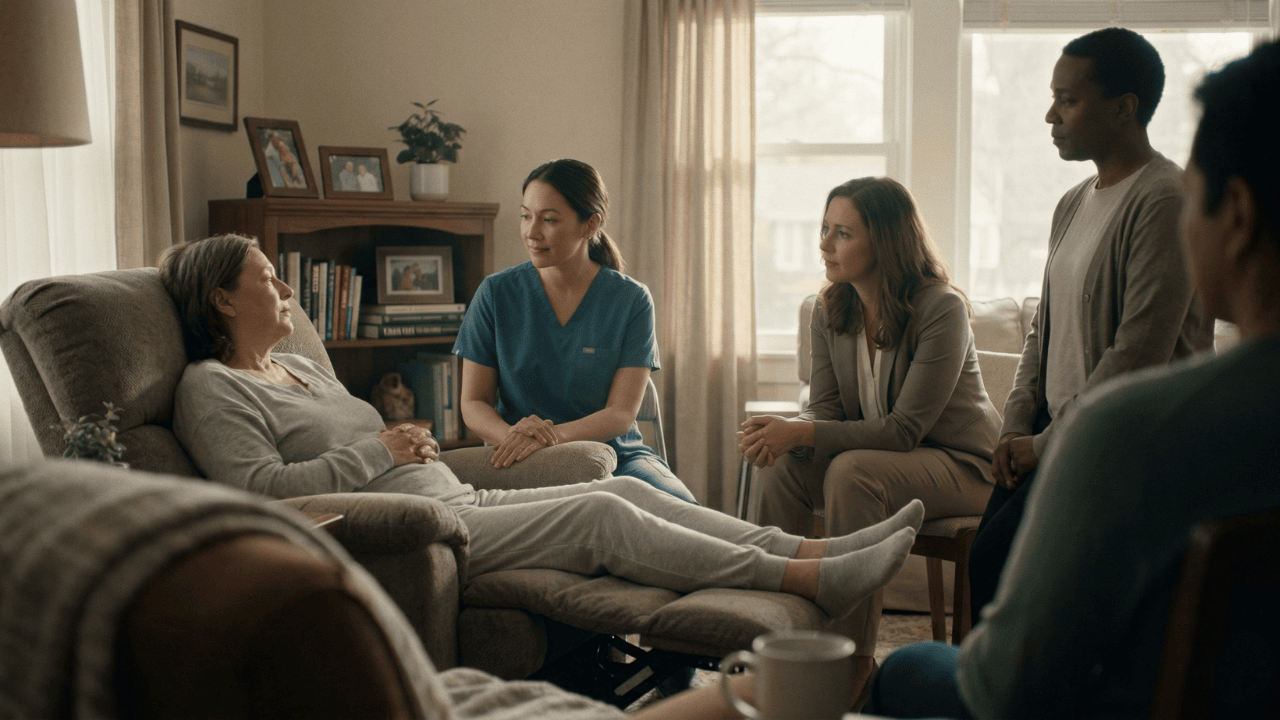
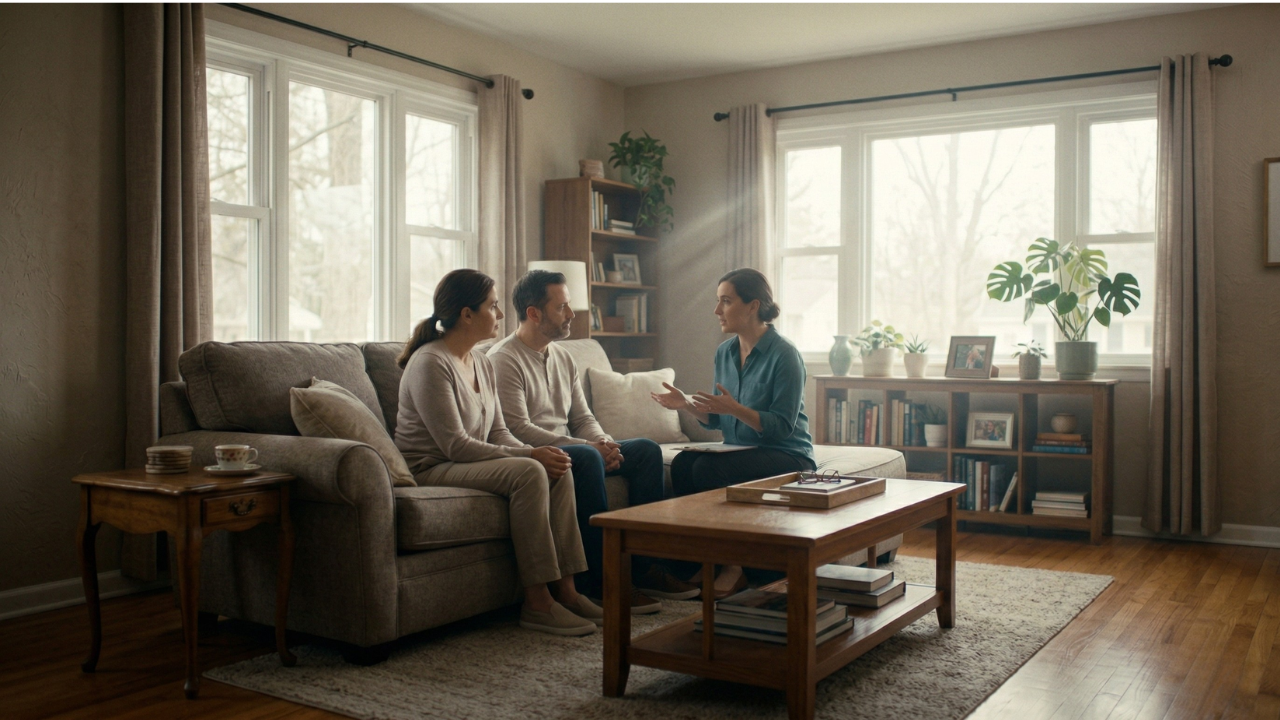
When Someone With Dementia Stops Recognizing Family: What Loved Ones Should Know
There may come a moment when someone you love looks at you and does not seem to know who you are.
It might happen during an ordinary visit. You walk into the room, say hello, and wait for the familiar smile or recognition you have known for years. Instead, your loved one seems uncertain. They may ask your name, mistake you for someone else, or respond as though you are a stranger.
For families navigating dementia, this can be one of the most emotional changes to experience.
You may wonder whether your loved one has forgotten your relationship, whether they still feel connected to you, or whether visiting continues to matter.
When someone with dementia stops recognizing family, it does not mean the relationship has lost its meaning. Dementia can change how the brain processes memories, faces, language, and familiar relationships. Yet there may still be opportunities for comfort, connection, and meaningful interaction.
This guide explains why recognition may change, how families can respond, what may still feel familiar, and when additional support may be helpful.
This article is for general educational purposes only and does not constitute medical, mental health, legal, insurance, or emergency advice. Dementia symptoms, progression, communication abilities, care needs, and hospice services vary based on the person’s diagnosis, condition, individualized plan of care, location, payer, and hospice eligibility. Sudden changes in recognition, awareness, or behavior should be reported promptly to a medical professional or hospice team.
1. Why Does Someone With Dementia Stop Recognizing Family?
Dementia affects brain functions involved in memory, language, recognition, judgment, and communication. As the condition progresses, a person may have increasing difficulty connecting a familiar face with a name, relationship, or memory.
For example, someone may recognize a person’s voice but not their face. They may remember a family member from decades earlier but struggle to understand who that person is today.
Some individuals may confuse family members with people from their past. A daughter may be mistaken for a sister. A spouse may be recognized as someone familiar without the person remembering the marriage.
These experiences can happen with Alzheimer’s disease and other forms of dementia, although the timing and pattern vary.
Families may notice:
- Forgetting the names of familiar people
- Confusing one family member with another
- Not recognizing familiar faces
- Remembering relationships from earlier in life more clearly than recent events
- Asking repeatedly who someone is
- Recognizing a person during one visit but not another
- Becoming uncertain about where they are or who is nearby
- Responding more readily to familiar voices, routines, or activities than to names
These changes reflect how dementia affects the brain. They are not intentional choices made by the person experiencing the illness.
2. Does Forgetting Someone Mean the Emotional Connection Is Gone?
One of the hardest questions families ask is whether their loved one still feels connected to them.
Recognition and emotional response are not exactly the same thing. A person may struggle to identify a family member by name or relationship while still responding positively to a familiar voice, a gentle expression, or a comforting interaction.
Some people with dementia may smile when someone familiar enters the room. Others may relax when they hear a recognizable voice or enjoy sitting beside a loved one without knowing how to describe the relationship.
These responses are not guaranteed, and they do not prove what someone remembers or understands. However, they remind families that communication can extend beyond names and conversation.
Connection may look different as dementia progresses.
Instead of hearing, “I know who you are,” a family member may notice a relaxed expression, a smile, an interest in music, or a willingness to share a quiet moment.
Those moments can still be meaningful.
3. What Should You Say When Your Loved One Does Not Recognize You?
When someone with dementia does not recognize you, it is natural to want to remind them who you are.
You may feel tempted to ask, “Don’t you remember me?” or “You know who I am, right?”
Although these questions come from a desire to reconnect, they can sometimes create pressure, embarrassment, or frustration for someone who is having difficulty remembering.
Instead, try introducing yourself gently.
You might say:
- “Hi, Mom. It’s your daughter. I’m happy to see you.”
- “Hello, Dad. It’s me. I came to spend some time with you.”
- “I’m your granddaughter. I thought we could sit together for a little while.”
- “It’s good to see you today.”
- “I’m here to keep you company.”
Use a calm tone and give the person time to respond. If they seem uncertain, you do not need to turn the moment into a memory test.
The goal is not to make them prove they remember you. The goal is to help the interaction feel comfortable and respectful.
4. What If They Mistake You for Someone Else?
A person living with dementia may sometimes identify a family member as someone from another period of life.
They might call their adult child by a sibling’s name or believe their spouse is a parent or childhood friend.
This can be confusing and emotional for loved ones, especially when the relationship has been an important part of both people’s lives.
If the mistake is harmless and the person appears comfortable, it may not be necessary to repeatedly correct them.
Families can focus on the emotion behind the interaction rather than insisting on an accurate name or relationship.
For example, if someone says, “You remind me of my sister,” you might respond, “She sounds very special to you.”
If the person seems frightened, suspicious, or distressed, a gentle introduction and reassurance may help. Avoid arguing or forcing them to accept an explanation they cannot process.
When confusion leads to significant distress or safety concerns, contact the medical or hospice team for guidance.
5. Can Someone With Dementia Still Recognize a Familiar Voice?
Sometimes a familiar voice, song, or way of speaking may seem easier for a person with dementia to respond to than a face or name.
This does not happen for everyone, and it is not possible to know exactly what a person recognizes or understands based on a single reaction.
Still, familiar sounds can offer another way to connect.
Families might try:
- Speaking in a calm, familiar tone
- Using the person’s preferred name
- Sharing a favorite song
- Reading a familiar poem or short passage
- Talking about a pleasant shared experience
- Using familiar greetings or expressions
- Allowing quiet time for a response
Keep conversations simple and avoid speaking too quickly or asking several questions at once.
If the person becomes tired, uncomfortable, or overwhelmed, a quieter interaction may be more appropriate.
6. How Can Families Stay Connected Without Relying on Memory?
When dementia makes conversation or recognition difficult, families may feel unsure what to do during visits.
It can help to shift the focus from remembering to experiencing something together.
Meaningful moments do not always require long conversations or shared memories.
Depending on the person’s preferences and abilities, families may try:
- Listening to familiar music together
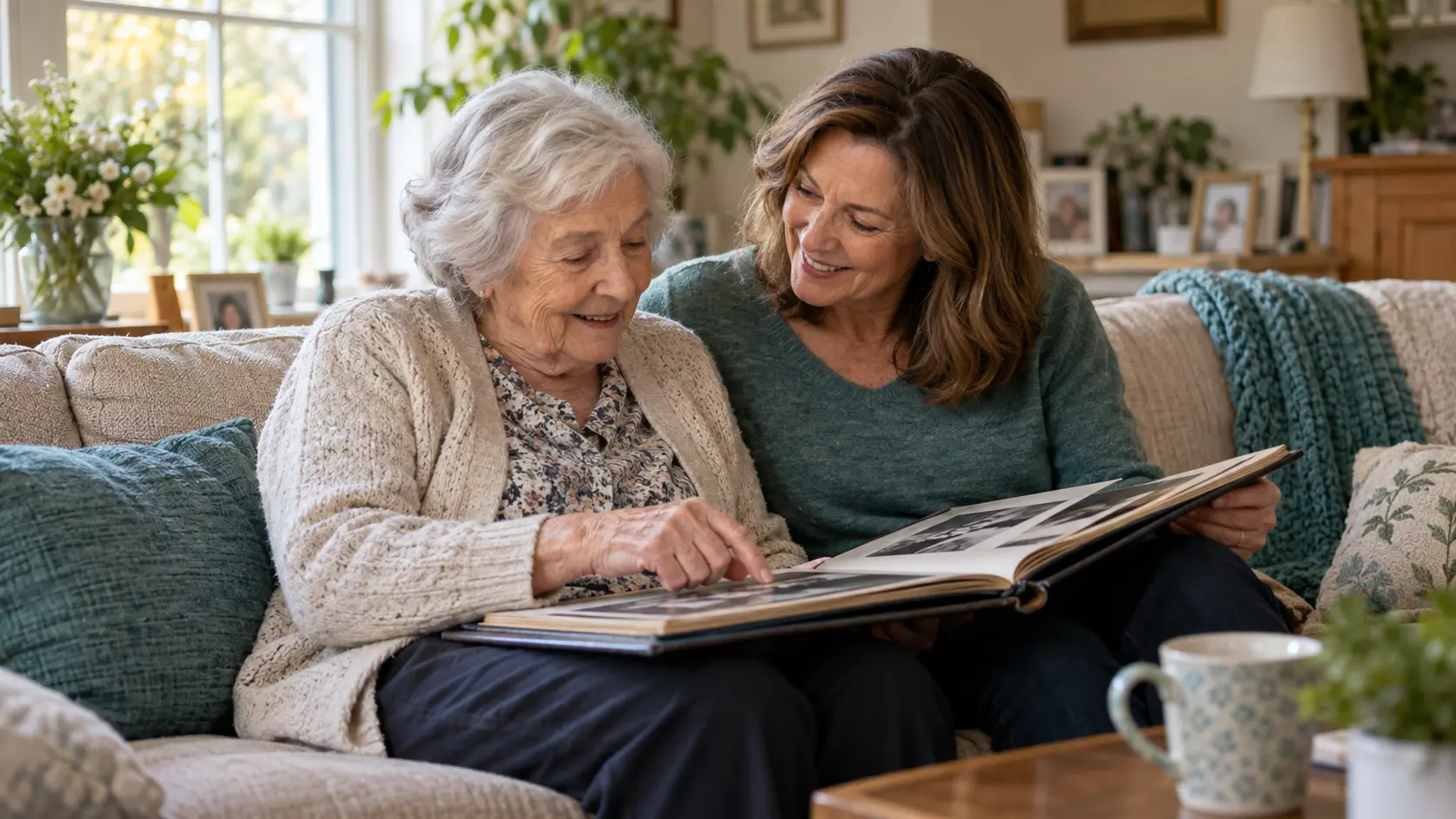
- Looking through photographs without asking the person to identify everyone
- Sitting together in a comfortable room
- Holding hands if touch is welcomed
- Sharing a familiar prayer or spiritual reading
- Watching birds or enjoying a view through a window
- Talking about pleasant subjects without expecting detailed answers
- Offering a familiar blanket or personal item
- Smiling, making eye contact, and allowing comfortable silence
Pay attention to the person’s responses. Some activities may feel familiar and comforting, while others may cause confusion or overstimulation.
There is no requirement to fill every moment with conversation.
Sometimes simply spending time together is enough.
7. What If Your Loved One Becomes Upset or Afraid Around Family?
Sometimes dementia affects more than recognition. A person may become suspicious, anxious, frightened, or uncomfortable around people they previously knew well.
This can happen because they are having difficulty understanding who is present or what is happening around them.
Families may find it helpful to:
- Approach from the front so the person can see you
- Introduce yourself before moving closer
- Use a gentle, respectful tone
- Give the person enough personal space
- Avoid unexpected touch
- Reduce noise and distractions
- Keep visits shorter if the person becomes overwhelmed
- Allow time for the person to become comfortable
- Ask the care team for guidance when distress continues
If your loved one does not want to be touched or seems uncomfortable, respect that response.
Even a familiar person may feel unfamiliar during certain moments.
It is important not to take these reactions personally. The person’s behavior may reflect changes in how their brain processes information rather than their feelings about the relationship.
8. Does Not Recognizing Family Mean Dementia Is in Its Final Stage?
Difficulty recognizing family members can become more common as dementia progresses, particularly in more advanced stages.
However, recognition changes alone do not determine the stage of dementia or how much time someone has left.
Different forms of dementia affect people in different ways. Some individuals may experience significant recognition difficulties while still being able to walk, eat, communicate, or participate in activities.
Others may have recognition changes alongside increasing physical decline.
Families may notice additional changes as dementia progresses, including:
- Increasing difficulty communicating
- Needing more assistance with bathing, dressing, or eating
- Changes in mobility and balance
- Difficulty swallowing
- Eating or drinking less
- Increased sleeping or fatigue
- Repeated infections
- Greater dependence on caregivers
These changes should be discussed with the person’s medical team.
No single symptom, including failure to recognize family, can reliably predict when death will occur or whether someone qualifies for hospice.
9. When Should Families Contact the Care Team?
Changes in recognition may develop gradually as dementia progresses. However, a sudden or significant change should not automatically be assumed to be part of dementia.
New confusion or a sudden decline in awareness can sometimes be associated with delirium, infection, medication effects, dehydration, or another medical concern that requires assessment.
Contact the medical or hospice team promptly if your loved one:
- Suddenly stops recognizing familiar people
- Becomes much more confused than usual
- Has a sudden change in alertness or behavior
- Appears frightened, agitated, or distressed
- Has a fever or other signs of illness
- Has a recent medication change followed by new confusion
- Develops new difficulty eating, drinking, or swallowing
- Has a fall or other safety concern
- Shows signs of pain or physical discomfort
For sudden severe symptoms or immediate safety concerns, seek urgent guidance and follow the emergency plan established with the care team. If the person is receiving hospice care, contact the hospice team immediately and follow their instructions.
Families do not need to identify the cause themselves. Describing what changed and when it started can help the care team determine appropriate next steps.
10. How Can Families Cope With the Emotional Impact?
Watching someone you love forget familiar names, faces, or relationships can bring a particular kind of grief.
The person is still physically present, but parts of the relationship may feel different from what they once were.
Family members may experience sadness, frustration, guilt, loneliness, or uncertainty. These emotions can exist alongside love and a desire to continue caring for the person.
It may help to remember:
- You do not need to make every visit feel successful.
- You do not need to test whether your loved one remembers you.
- A difficult interaction does not erase your shared history.
- It is okay to feel sadness about changes in the relationship.
- Meaningful connection may take different forms over time.
- You are allowed to ask for emotional and practical support.
Some families find it helpful to speak with a counselor, social worker, spiritual care provider, or trusted support person.
Caregivers may also need opportunities to rest, spend time with others, and care for their own emotional well-being.
Supporting someone with dementia does not mean carrying every difficult feeling alone.
11. When Might Hospice Care Be Appropriate for Someone With Dementia?
Hospice care may become appropriate when dementia has progressed to an advanced stage, the person meets hospice eligibility requirements, and the goals of care focus on comfort and quality of life.
Hospice eligibility is not determined by memory loss or recognition changes alone.
For Medicare hospice eligibility, physicians generally certify that a person has a life expectancy of six months or less if the illness follows its expected course. The clinical evaluation considers the person’s overall condition and applicable eligibility requirements.
Depending on the individual’s situation, concerns that may prompt a hospice conversation include:
- Significant decline in mobility or independence
- Increasing difficulty swallowing
- Significant weight loss or reduced nutritional intake
- Recurrent infections or other medical complications
- Increasing dependence on others for daily care
- Progressive loss of communication abilities
- Worsening weakness or overall functional decline
- Care goals shifting toward comfort and symptom management
Families do not need to wait until they are certain hospice is appropriate to ask questions.
A hospice evaluation can help determine whether the person may qualify and what support options are available.
12. How Can Hospice Support Families Living With Advanced Dementia?
When dementia reaches an advanced stage, families may need help managing physical symptoms, communication changes, daily care, and emotional concerns.
Hospice focuses on comfort, dignity, and support for both the patient and loved ones.
Depending on the patient’s needs and individualized plan of care, hospice support may include:
- Nursing assessment and symptom management
- Support for pain, discomfort, anxiety, and other symptoms
- Guidance about changes in communication and awareness
- Education about safe and comfortable daily care
- Assistance with personal care through hospice aides when appropriate
- Social work and emotional support
- Spiritual care based on patient and family preferences
- Caregiver education and available respite resources
- Guidance when the person’s condition changes
- Bereavement support for loved ones
Hospice does not restore lost memories or reverse dementia. Instead, it helps address comfort needs and supports families as the illness progresses.
Services, medications, equipment, supplies, and visit frequency depend on the individual’s condition, hospice diagnosis, plan of care, location, payer, and eligibility.
A Simple Checklist for Visiting Someone With Dementia Who May Not Recognize You
Before or during a visit, these reminders may help:
- Approach calmly and make sure the person can see you.
- Introduce yourself without turning recognition into a test.
- Use a familiar, gentle tone of voice.
- Allow extra time for responses.
- Avoid arguing about names, dates, or relationships.
- Try familiar music, photographs, or simple activities.
- Respect the person’s preferences about touch and conversation.
- Notice signs of fatigue, discomfort, or overstimulation.
- Remember that a quiet visit can still be meaningful.
- Contact the care team if confusion changes suddenly or causes distress.
Every person living with dementia is different. What helps during one visit may not help during another.
Follow the person’s cues and adapt with patience.
How Bristol Hospice Can Help
At Bristol Hospice, we understand how emotional it can be when dementia changes the way someone recognizes or communicates with the people they love.
Families may find themselves learning new ways to connect while also managing increasing care needs and difficult decisions.
Our care teams support eligible patients with advanced dementia through individualized, comfort-focused care. We also help loved ones understand changes, ask questions, and find support during the caregiving journey.
If your family is wondering whether hospice may be appropriate for someone living with advanced dementia, our team can help you understand eligibility, available services, and possible next steps.
Frequently Asked Questions About Dementia and Recognizing Family
Why does someone with dementia stop recognizing family members?
Dementia can affect the brain’s ability to recognize faces, remember names, understand relationships, and connect memories with familiar people. These changes may become more noticeable as the condition progresses.
Does someone with dementia forget that they love you?
Difficulty recognizing a family member does not tell us exactly what a person feels. Some people with dementia may continue responding positively to familiar voices, expressions, music, or comforting interactions even when they cannot identify someone by name.
Should I remind my loved one who I am?
A gentle introduction can be helpful. Instead of asking the person to remember you, try saying who you are in a calm, familiar way. Avoid turning the interaction into a test or repeatedly correcting them if it causes distress.
Can someone with dementia recognize a voice but not a face?
Some people may respond differently to familiar voices, faces, sounds, or routines. Dementia affects individuals in different ways, so responses can vary. A familiar voice may provide comfort even when recognition is uncertain.
What should I do if my parent with dementia thinks I am someone else?
Respond gently and avoid arguing if the mistake is harmless. You can introduce yourself or focus on making the interaction comfortable. If the confusion causes fear, agitation, or safety concerns, ask the care team for guidance.
Is not recognizing family a sign of late-stage dementia?
Difficulty recognizing familiar people can occur in more advanced dementia, but it does not determine disease stage by itself. Medical professionals consider memory, communication, physical function, daily care needs, and other clinical changes.
Should I keep visiting someone with dementia who does not recognize me?
Visits may still provide companionship, comfort, and opportunities for connection. Familiar music, a calm voice, and shared activities may be meaningful even when verbal recognition is limited. Adapt visits to the person’s comfort and preferences.
Can sudden confusion be caused by something other than dementia?
Yes. Sudden confusion or a significant change in awareness may be related to delirium, infection, medication effects, dehydration, or another medical issue. Contact the medical or hospice team promptly rather than assuming the change is simply dementia progression.
When should hospice be considered for someone with dementia?
Hospice may be appropriate when dementia has progressed significantly, the person meets hospice eligibility requirements, and care goals focus on comfort and quality of life. Recognition changes alone do not establish eligibility. A hospice evaluation can help families understand their options.
Even When Recognition Changes, Your Presence Can Still Matter
When someone with dementia stops recognizing family, it can feel as though an important part of the relationship has disappeared.
The conversations may be different. Familiar names may no longer come easily. The person you love may not respond in the way they once did.
But a relationship is more than the ability to remember a name.
There may still be opportunities to share a familiar song, enjoy a quiet afternoon, offer a gentle smile, or simply sit together.
You do not have to make every moment into a memory.
Sometimes being present, patient, and attentive to what feels comfortable is enough.
Learn More About Dementia and Hospice Care at Bristol Hospice
Bristol Hospice provides compassionate hospice care for eligible patients living with advanced dementia and other serious illnesses. If you have questions about dementia progression, hospice eligibility, comfort care, or caregiver support, contact our care team.
You may also find these related resources helpful:
- What Is the Difference Between Alzheimer’s and Dementia?
- What Is Sundowning in Dementia: What Families Need to Know
- What Is Frontotemporal Dementia? Symptoms, Stages, and How Hospice Can Help
- End-of-Life Care Options: Dispelling Hospice Myths
- Bristol Hospice Bright Moments Program
This article is for general educational purposes only and does not constitute medical, mental health, legal, insurance, financial, or emergency advice. Dementia progression, hospice eligibility, medications, symptom management, visit frequency, and coverage vary based on the patient’s diagnosis, condition, individualized plan of care, location, and payer. For questions about hospice care or whether your loved one may qualify, contact Bristol Hospice at 1-855-BRISTOL. Our team is available 24 hours a day, 7 days a week.