Hospice Care After a Stroke: Comfort, Dignity, and Support

A serious stroke can change life suddenly. One day, a person may be speaking, eating, walking, and making decisions independently. After a stroke, they may face changes in movement, swallowing, communication, thinking, breathing, or the ability to complete daily activities.
For loved ones, the days and weeks after a severe stroke can feel overwhelming. Families may be trying to understand what recovery could look like, whether the patient will regain certain abilities, how to manage symptoms, and what kind of care will support comfort and dignity.
Hospice care may be appropriate after a stroke when the illness or injury has caused significant decline, the focus of care has shifted toward comfort, and a physician determines that the patient may have a life expectancy of six months or less if the condition follows its expected course.
This article explains when hospice care may be considered after a stroke, what signs families may notice, how hospice can support comfort, and what questions loved ones can ask when making care decisions.
This article is for general educational purposes only and does not constitute medical, legal, insurance, or financial advice. Stroke care decisions should always be discussed with the patient’s physician, neurologist, care team, and hospice provider when appropriate.
What Happens After a Serious Stroke?
A stroke happens when blood flow to part of the brain is blocked or when there is bleeding in or around the brain. The effects of a stroke depend on the type of stroke, the area of the brain affected, the severity of the injury, the patient’s overall health, and how the person responds to treatment and rehabilitation.
Some people recover many abilities after a stroke. Others experience lasting changes that affect speech, swallowing, movement, memory, behavior, alertness, or independence. In severe cases, a stroke may lead to profound disability, repeated complications, or ongoing decline.
After a serious stroke, loved ones may need to make decisions about hospitalization, rehabilitation, feeding support, comfort measures, safety, care setting, and long-term goals. These decisions can feel especially difficult when the patient cannot clearly communicate their wishes.
Hospice may become part of the conversation when the stroke has caused significant decline and the goals of care are focused on comfort rather than life-prolonging treatment.
What Does Hospice Care Mean After a Stroke?
Hospice care after a stroke focuses on comfort, dignity, symptom management, and support for both the patient and loved ones. Instead of focusing on aggressive treatment or rehabilitation as the primary goal, hospice helps support quality of life when recovery is limited or the patient’s condition continues to decline.
Hospice does not mean the patient is forgotten or that care stops. It means the care team focuses on helping the patient remain as comfortable as possible while also supporting loved ones through education, communication, and emotional care.
Hospice support may include nursing visits, physician oversight related to hospice care, medications for pain and symptom management, hospice aide support, social work, chaplaincy and spiritual care, volunteer support when available, medical equipment and supplies related to the hospice diagnosis, and bereavement support.
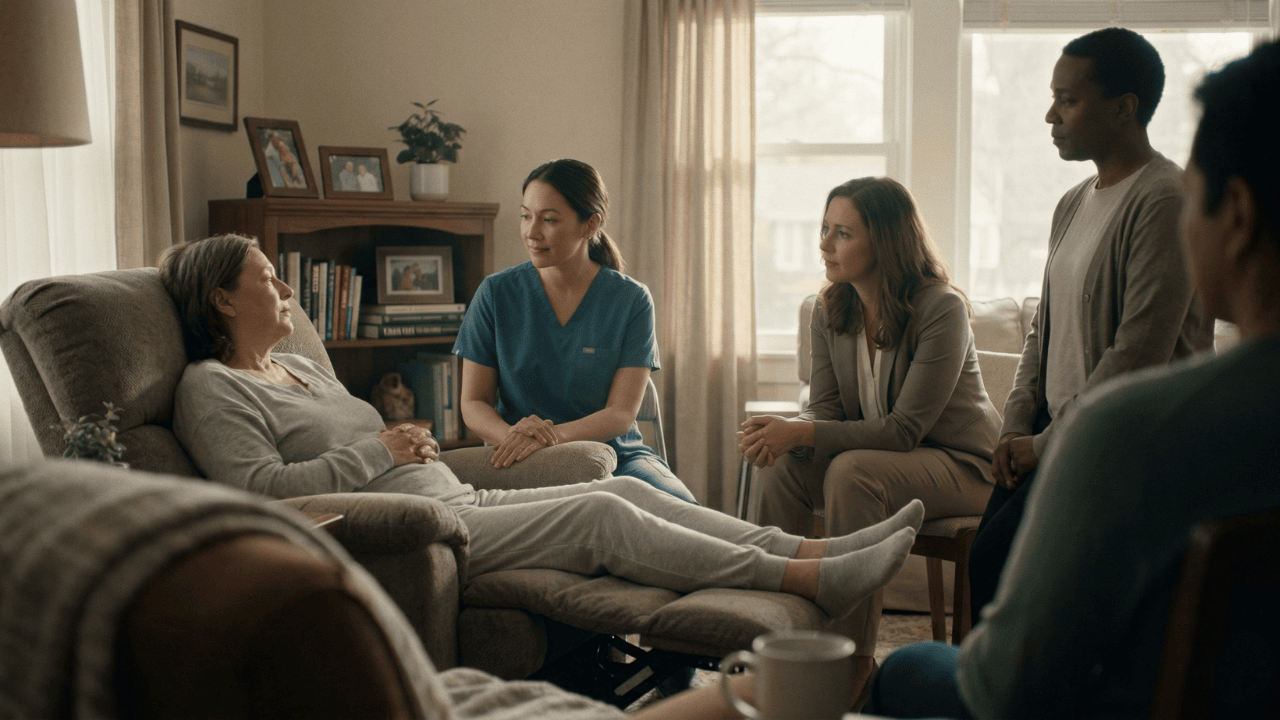
Hospice care can usually be provided wherever the patient calls home, including a private residence, assisted living community, memory care community, skilled nursing facility, or another care setting.
When May Hospice Be Appropriate After a Stroke?
Hospice may be appropriate after a stroke when the patient has experienced serious decline and a physician determines that the patient may have a life expectancy of six months or less if the condition follows its expected course.
Families may begin asking about hospice when a loved one has severe weakness or paralysis, difficulty swallowing, repeated aspiration or pneumonia, significant weight loss, reduced alertness, inability to communicate clearly, repeated infections, pressure injuries, increasing dependence with daily activities, or limited recovery despite treatment and rehabilitation efforts.
Hospice may also be considered when the patient or loved ones choose comfort-focused care instead of additional hospitalization, procedures, or interventions that no longer match the patient’s goals or expected benefit.
No single sign determines hospice eligibility on its own. Physicians and hospice teams look at the full clinical picture, including the severity of the stroke, functional decline, complications, nutrition, swallowing ability, infections, skin condition, alertness, and overall prognosis.
If loved ones are unsure whether hospice is appropriate, they can ask for an evaluation. Even if the patient is not eligible yet, the conversation can help families understand what to watch for and what support may be available later.
What Signs May Families Notice After a Severe Stroke?
After a severe stroke, families may notice changes that affect the patient’s body, communication, and daily life. Some changes may improve with time and rehabilitation. Others may remain or worsen, especially when the stroke is severe or the patient has other serious health conditions.
Common concerns may include weakness on one side of the body, difficulty walking, increased falls, trouble sitting upright, difficulty swallowing, coughing or choking during meals, reduced appetite, weight loss, confusion, reduced alertness, difficulty speaking, inability to express pain, agitation, restlessness, changes in breathing, skin breakdown, or the need for full assistance with personal care.
Some patients may also experience repeated hospitalizations, infections, aspiration pneumonia, dehydration, poor intake, wounds, or worsening overall weakness.
These changes do not automatically mean a patient qualifies for hospice. They do mean it may be time to speak with the physician or care team about prognosis, goals of care, and whether comfort-focused support should be discussed.
How Does Hospice Help With Stroke-Related Symptoms?
Hospice care after a stroke may help manage symptoms and comfort needs related to the patient’s condition. Because stroke can affect movement, swallowing, communication, and awareness, comfort care must be individualized.
The hospice team may help with pain, shortness of breath, anxiety, agitation, restlessness, constipation, nausea, skin discomfort, trouble sleeping, weakness, swallowing concerns, mouth care, positioning, and other symptoms that affect comfort.
For patients who cannot clearly communicate, the hospice team looks for nonverbal signs of discomfort. These may include facial expressions, body tension, moaning, restlessness, changes in breathing, withdrawal, or distress during movement or care.
The care plan may include medications when appropriate, equipment for safety and comfort, repositioning guidance, skin care, caregiver education, emotional support, spiritual care, and communication with the hospice physician or medical director when symptoms change.
What If the Patient Cannot Speak Clearly?
Many stroke survivors experience changes in speech, understanding, or communication. Some may have aphasia, which can make it difficult to speak, understand language, read, or write. Others may be alert but unable to express pain, fear, or basic needs clearly.
Hospice teams understand that communication may look different after a stroke. Nurses and aides may look for facial expressions, gestures, body movement, breathing changes, restlessness, or responses to care. Loved ones can also provide valuable insight because they often know the patient’s usual expressions, preferences, and signs of distress.
When possible, the care team may use simple questions, yes-or-no communication, visual cues, calm repetition, or extra time for the patient to respond. The goal is to honor the patient’s dignity and include them in care as much as possible.
Even when words are limited, comfort, presence, and respect still matter deeply.
What If the Patient Has Trouble Swallowing?
Difficulty swallowing, also called dysphagia, can happen after a stroke. This can make eating, drinking, and taking medications more difficult. It may also increase the risk of coughing, choking, aspiration, pneumonia, dehydration, or weight loss.
Swallowing decisions can be emotional for loved ones. Families may be asked to consider diet changes, thickened liquids, feeding assistance, feeding tubes, or comfort-focused approaches depending on the patient’s condition and goals.
Hospice can help support comfort when swallowing becomes difficult and the focus of care has shifted away from aggressive intervention. The team may provide education about safe comfort feeding when appropriate, mouth care, medication adjustments, positioning, signs of distress, and what changes loved ones may expect.
These decisions should be made with the physician, care team, speech-language pathologist when involved, patient when possible, and loved ones. Hospice does not replace that decision-making process, but it can help provide support when the goal becomes comfort.
What If Recovery Has Slowed or Stopped?
Stroke recovery can vary widely. Some people make significant progress. Others recover only partially or reach a point where improvement becomes limited.
When recovery slows or stops, loved ones may feel uncertain about what to do next. They may wonder whether continuing hospital visits, rehabilitation, or procedures will help, or whether those efforts are becoming too difficult for the patient.
This is where a goals-of-care conversation can help. The care team can discuss what is medically realistic, what the patient would want, what treatments may or may not help, and what kind of care best supports comfort and dignity.
Hospice may be appropriate when the goals of care have changed and the patient meets eligibility criteria. Choosing hospice does not mean the patient’s life has less value. It means care is being aligned with comfort, quality of life, and what matters most now.
How Does Hospice Support Loved Ones After a Stroke?
A severe stroke affects the whole family. Loved ones may suddenly become caregivers, decision makers, advocates, and emotional support. They may be learning new care routines while also grieving the changes in the person they love.
Hospice helps loved ones understand the care plan, recognize changes, know when to call, and support comfort at home or in the patient’s care setting. The team can also help with emotional support, spiritual care, caregiver education, and bereavement support after the patient’s passing.
Social workers may help with planning, family communication, resources, and emotional support. Chaplains can provide spiritual support based on the patient’s beliefs, values, and preferences. Hospice aides may help with personal care needs depending on the plan of care. Nurses guide symptom management and coordinate with the hospice physician or medical director.
For families facing stroke-related decline, having a team to call can reduce the feeling of having to manage every change alone.
Can Hospice Care Happen at Home After a Stroke?
Yes. Hospice care can usually be provided wherever the patient calls home. This may be a private residence, assisted living community, memory care community, skilled nursing facility, or another care setting.
Hospice at home after a stroke may include nursing visits, hospice aide support, symptom management, equipment and supply coordination, caregiver education, and emotional and spiritual support. The care team helps loved ones understand how to support comfort, what changes to report, and who to call when symptoms change.
Hospice does not usually mean a nurse is physically present in the home every hour of the day. Loved ones or facility caregivers often remain involved in daily care. The hospice team provides scheduled visits, care coordination, education, and phone support for urgent questions or changes.
How Does the Medicare Hospice Benefit Apply After a Stroke?
For eligible patients, Medicare Part A generally covers hospice care when hospice benefit requirements are met. This includes certification by the hospice physician and the patient’s regular physician, if the patient has one, that the patient is terminally ill with a life expectancy of six months or less if the illness follows its expected course.
The patient must also choose comfort-focused care instead of curative treatment for the terminal illness and related conditions. Covered hospice services may include nursing care, physician services related to hospice care, medications for pain and symptom management, medical equipment, medical supplies, hospice aide services, social work, spiritual care, respite care, short-term inpatient care when needed, and bereavement support.
For many eligible patients with Medicare Part A, covered hospice services related to the terminal diagnosis are provided with little to no out-of-pocket cost. Certain copays or coinsurance may apply in specific situations, such as outpatient medications for pain and symptom management or inpatient respite care. Room and board are generally not covered in routine hospice care when a patient lives in a nursing home, assisted living community, or hospice facility, unless a covered short-term inpatient level of care is medically necessary and arranged by the hospice team.
Medicaid and many private insurance plans also include hospice coverage, though benefits can vary. Bristol Hospice can help patients and loved ones understand what coverage may include and what questions to ask before care begins.
Questions to Ask After a Serious Stroke
When a loved one has had a serious stroke, families may feel overwhelmed by medical information, emotional decisions, and uncertainty about the future. Writing down questions before speaking with the physician or care team can help.
Helpful questions may include:
- How severe was the stroke?
- What abilities may return, and what changes may be permanent?
- Is the patient able to swallow safely?
- Is the patient getting enough nutrition and hydration?
- What complications are most concerning right now?
- Is rehabilitation still helping meet the patient’s goals?
- What symptoms should we expect if the condition declines?
- Could hospice care be appropriate now?
- Can hospice care be provided at home or in the current care setting?
- Who should we call if symptoms change?
These questions can help loved ones better understand the patient’s condition, the care options available, and whether comfort-focused care should be considered.
How Bristol Hospice Supports Patients After a Stroke
At Bristol Hospice, we understand that a serious stroke can bring sudden and painful changes for both patients and loved ones. Families may be grieving the loss of independence, communication, mobility, or connection while trying to make important care decisions.
Our interdisciplinary team works together to support comfort, dignity, and quality of life. Nurses, physicians, aides, social workers, chaplains, volunteers, and bereavement professionals each provide support based on the patient’s needs and wishes.
Hospice care after a stroke may include symptom management, caregiver education, emotional and spiritual support, equipment and supply coordination, and guidance as the patient’s condition changes.
Most importantly, hospice care helps patients and loved ones know they do not have to face this season alone.
Frequently Asked Questions About Hospice Care After a Stroke
When is hospice appropriate after a stroke?
Hospice may be appropriate after a stroke when the patient has serious decline, the focus of care has shifted toward comfort, and a physician determines that the patient may have a life expectancy of six months or less if the condition follows its expected course. Eligibility depends on the full clinical picture, not one sign alone.
Can someone receive hospice care after a stroke?
Yes. A person may receive hospice care after a severe stroke if they meet hospice eligibility criteria and choose comfort-focused care for the terminal illness and related conditions.
What signs may suggest hospice should be discussed after a stroke?
Signs that may lead families to ask about hospice include severe weakness, difficulty swallowing, repeated aspiration or pneumonia, significant weight loss, reduced alertness, inability to communicate clearly, repeated infections, pressure injuries, or increasing dependence with daily activities.
Can hospice help if a stroke patient cannot speak?
Yes. Hospice teams can assess comfort using nonverbal signs such as facial expression, body tension, restlessness, breathing changes, or distress during care. Loved ones can also help the team understand the patient’s usual signs of comfort or discomfort.
Can hospice help with swallowing problems after a stroke?
Hospice can help support comfort when swallowing becomes difficult and the focus of care has shifted toward comfort. The team may provide education about mouth care, positioning, medication adjustments, signs of distress, and comfort-focused approaches when appropriate.
Can hospice care after a stroke happen at home?
Yes. Hospice care can usually be provided wherever the patient calls home, including a private residence, assisted living community, memory care community, skilled nursing facility, or another care setting.
Does Medicare cover hospice care after a stroke?
For eligible patients, Medicare Part A generally covers hospice care related to the terminal illness and related conditions when hospice benefit requirements are met. Coverage may include nursing care, physician services related to hospice care, medications for pain and symptom management, medical equipment, supplies, aide services, social work, spiritual care, respite care, short-term inpatient care when needed, and bereavement support.
Is choosing hospice after a stroke giving up?
No. Choosing hospice means the focus of care changes toward comfort, dignity, symptom management, and quality of life. For many patients and loved ones, hospice provides support when recovery is limited and care goals have changed.
How do I know if my loved one is eligible for hospice after a stroke?
A hospice evaluation can help determine whether hospice may be appropriate. The hospice team can review the patient’s condition, symptoms, goals, and care needs, and work with physicians to understand eligibility.
Support After a Serious Stroke
A serious stroke can leave loved ones facing questions they never expected to ask. Decisions about recovery, comfort, swallowing, communication, care settings, and quality of life can feel overwhelming.
Hospice care exists to support patients and loved ones when the focus turns toward comfort, dignity, and quality of life. It provides medical care, emotional support, spiritual care, education, and guidance through a difficult season.
If you are wondering whether hospice care may be appropriate after a serious stroke, Bristol Hospice is here to listen, answer questions, and help you understand your options.
Learn More About Hospice Care at Bristol Hospice
Bristol Hospice provides compassionate hospice and palliative care for patients with serious illnesses across several states nationwide. If you have questions about hospice care after a stroke or whether your loved one may be eligible, contact our care team today.
You may also find these related resources helpful:
- What Is Hospice Care?
- Does Medicare Pay for Hospice Care? What Families Should Know
- Starting Hospice Care at Home: What Families Can Expect
- Hospice Pain Management: What Families Should Know
- Kidney Failure and Hospice Care: When Is It Time?
This article is for general educational purposes only and does not constitute medical, legal, insurance, or financial advice. If you have questions about hospice care or whether your loved one qualifies, contact us any time at 1-855-BRISTOL. We are available 24 hours a day, 7 days a week, 365 days a year.