
When someone is near the end of life, breathing may become slower, faster, irregular, noisy, shallow, or include pauses. These changes can be upsetting for loved ones to witness. Bristol Hospice explains what families may notice, what not to assume, and when to contact the hospice team for guidance.
How to Have the End of Life Conversation with Your Family
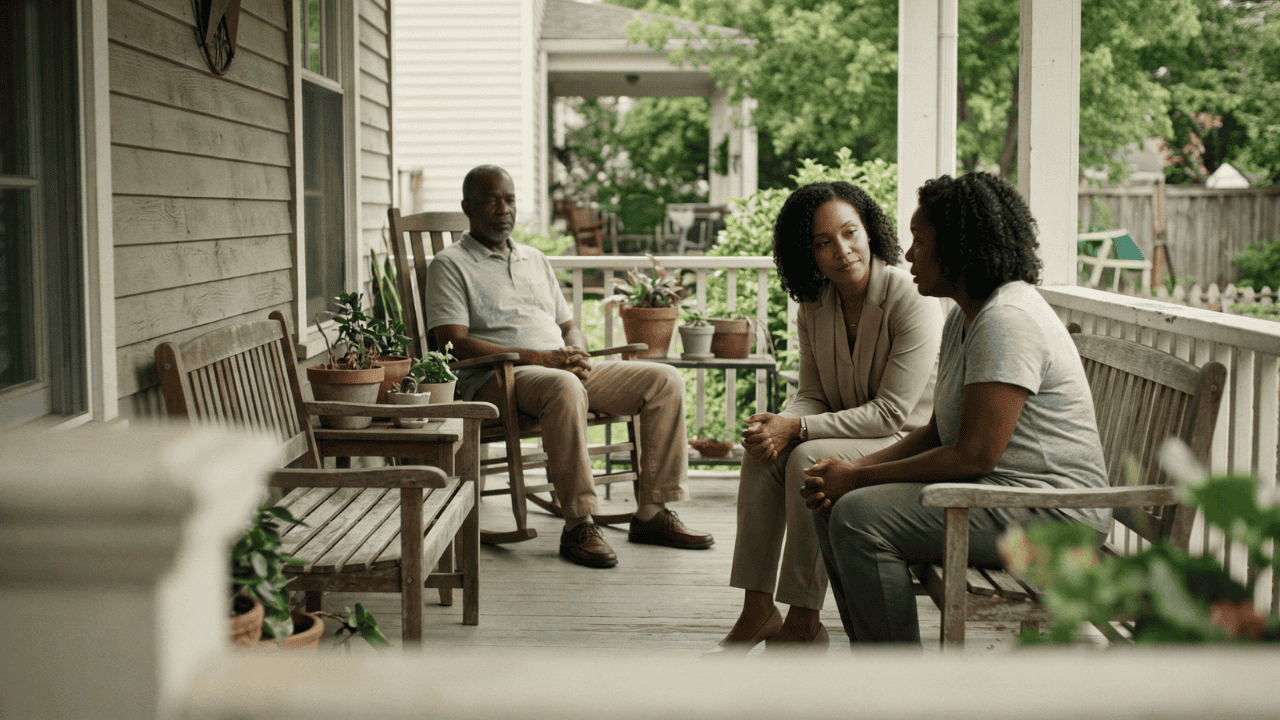
One of the most important conversations a family can have is also one of the hardest to start. Talking about end of life wishes, hospice care, and what a loved one wants in their final chapter feels uncomfortable for most families. Many people avoid it entirely, hoping that somehow the right decisions will be made when the time comes without anyone having to say the difficult words out loud.
But families who have these conversations — even imperfect ones — consistently report feeling more prepared, more connected, and less burdened when facing the end of life together. And families who do not have them often carry regret that they did not.
At Bristol Hospice, we walk alongside families through some of the most profound moments of their lives. This article offers general guidance on how to approach end of life conversations, what to cover, and how to create the conditions that make these discussions possible even when they feel impossible.
This is not medical or legal advice. For guidance specific to your situation, please speak with your loved one’s care team or a qualified professional.
Why End of Life Conversations Matter
End of life conversations matter because they give people the opportunity to be known, heard, and honored in the way they choose to leave this world. Without them, families are left making critical decisions under pressure, often during moments of grief and crisis, without knowing what their loved one truly wanted.
Research consistently shows that people who have documented their end of life wishes are more likely to receive the care they actually want, less likely to spend their final days in settings they would not have chosen, and more likely to feel a sense of peace and completion in their final chapter. Their families also report less complicated grief and a stronger sense that they honored their loved one well.
National Healthcare Decisions Day, observed on April 16 each year, exists specifically to encourage individuals and families to have these conversations and to document their wishes before a crisis forces the issue. Bristol Hospice supports this mission because we have seen firsthand what a difference it makes when families have done this work together.
Why These Conversations Are So Hard to Start
End of life conversations are difficult to start for understandable reasons. Talking about death can feel like inviting it. Many families operate under an unspoken agreement that acknowledging serious illness or decline is somehow a betrayal of hope. There is also the fear of upsetting a loved one, saying the wrong thing, or opening a door that cannot be closed.
Cultural backgrounds, family dynamics, and personal beliefs all shape how comfortable or uncomfortable a family is with these discussions. Some families have a tradition of openness around difficult topics. Others have spent generations avoiding them entirely.
None of this means the conversation should not happen. It means it requires intention, patience, and the willingness to sit with discomfort for the sake of something more important than comfort.
When to Have the End of Life Conversation
The best time to have an end of life conversation is before a crisis makes it unavoidable. Ideally this happens when your loved one is still relatively well, cognitively clear, and able to participate fully in the discussion. Waiting until a medical emergency, a sudden decline, or a hospice admission is not ideal because the pressure of the moment makes it harder for everyone to think clearly and speak honestly.
Some natural moments that can prompt the conversation include:
- A new or progressing serious diagnosis
- A hospitalization that raises questions about what comes next
- A significant birthday or life milestone that brings mortality to mind naturally
- The death of a peer, friend, or family member that opens the door to reflection
- A general desire to get affairs in order regardless of current health status
If your loved one is already in declining health, the conversation is still worth having even if it feels late. A conversation now is always better than no conversation at all. Your hospice care team can help facilitate this discussion if that feels like a more comfortable starting point than navigating it alone as a family.
How to Start the Conversation
Starting the end of life conversation is often the hardest part. Many families find it helpful to approach it indirectly at first, using a news story, the experience of a friend, or a question about someone else’s situation to open the door before making it personal.
Some conversation starters families find useful include:
- “I was thinking about what happened with our neighbor and it made me realize we have never talked about what we would want in that situation.”
- “I love you and I want to make sure that if something ever happened I would know how to honor what matters most to you.”
- “I have been thinking about getting my own affairs in order and it made me wonder if we should talk about yours too.”
- “I read something about National Healthcare Decisions Day and it made me realize I do not actually know what you would want.”
There is no perfect opening. What matters is that you begin. An imperfect conversation that happens is infinitely more valuable than a perfect one that never does.
What to Cover in an End of Life Conversation
End of life conversations are most useful when they cover not just practical matters but the values and priorities that should guide decisions when your loved one can no longer speak for themselves. Here are the areas families find most meaningful to discuss:
Where they want to be. Most people have strong feelings about where they want to spend their final days. At home is the most common preference. Understanding this in advance helps families make it possible.
What matters most to them. For some people this is being free from pain. For others it is being conscious and present. For others it is being surrounded by family or having spiritual support. Knowing this guides every care decision.
What they do not want. Many people have clear feelings about medical interventions they do not want at the end of life. Understanding these preferences helps families and medical teams honor them.
Who they trust to make decisions. Identifying a healthcare proxy or durable power of attorney for healthcare is one of the most practical and important outcomes of this conversation. This is the person who will speak for your loved one if they cannot speak for themselves.
What they want people to know. End of life conversations often create space for things that have not been said — expressions of love, gratitude, forgiveness, or closure that matter deeply to everyone involved.
Advance Directives and Why They Matter
An advance directive is a legal document that records a person’s end of life wishes and instructions for their medical care if they become unable to communicate those wishes themselves. Having this conversation is important. Having it documented is what makes it actionable.
Common advance directive documents include a living will, which describes specific medical wishes, and a durable power of attorney for healthcare, which designates a trusted person to make medical decisions on the individual’s behalf. Requirements for these documents vary by state.
National Healthcare Decisions Day on April 16 encourages all adults to complete these documents and to share them with their family members and healthcare providers. Your loved one’s physician, a hospital social worker, or a hospice care team can help connect you with the appropriate resources for your state.
What to Do If Your Loved One Does Not Want to Have This Conversation
Some people resist end of life conversations entirely. They may feel that talking about death is morbid, that they do not need to plan because they will not face this situation, or that having the conversation is the same as giving up. This resistance is common and it deserves respect even as you gently continue to try.
Some approaches that families find helpful when a loved one is resistant:
- Try again at a different time rather than pushing through the resistance in the moment
- Frame the conversation around your own needs rather than theirs — “I need to know what you would want so that I can take care of you the right way”
- Involve a trusted third party such as a physician, chaplain, social worker, or hospice care coordinator who can facilitate the conversation in a neutral setting
- Start with smaller, less charged questions rather than jumping directly to the most difficult topics
- Accept that the conversation may happen in pieces over time rather than in one sitting
If a loved one is cognitively impaired and unable to participate meaningfully in this conversation, speak with their physician and a hospice social worker about how to proceed in a way that honors their known values and dignity.
How Hospice Care Teams Support These Conversations
Hospice care teams are experienced in facilitating end of life conversations and can be a valuable resource for families who are struggling to have them on their own. Social workers, chaplains, and care coordinators on hospice teams are specifically trained to create space for these discussions in a way that feels safe, unhurried, and compassionate.
At Bristol Hospice, we believe that these conversations are not just a practical necessity. They are an act of love. They are how families ensure that the people they love are truly known and truly honored in the way they leave this world. Our teams are here to support families through every part of that process, including the conversations that feel too hard to start alone.
Frequently Asked Questions About End of Life Conversations
When should families have end of life conversations?
The best time is before a crisis makes it unavoidable. Ideally this happens when a loved one is cognitively clear and able to participate fully. However it is never too late to have this conversation even if a loved one’s health is already declining.
What is an advance directive and why does it matter?
An advance directive is a legal document that records a person’s wishes for their medical care if they become unable to communicate. It typically includes a living will and a designation of a healthcare proxy. Having these documents in place ensures that a person’s wishes are known and can be honored.
What is National Healthcare Decisions Day?
National Healthcare Decisions Day is observed on April 16 each year. It is a national initiative that encourages individuals and families to complete advance directives and have conversations about end of life wishes before a health crisis makes those conversations harder.
What if my loved one refuses to talk about end of life planning?
Resistance is common. Try approaching the conversation at a different time, framing it around your own needs rather than theirs, or involving a trusted third party such as a physician or hospice social worker who can help facilitate the discussion.
Can a hospice team help facilitate end of life conversations?
Yes. Hospice social workers, chaplains, and care coordinators are specifically trained to help families navigate these conversations. If your family is struggling to have this discussion on your own, reaching out to a hospice team is a meaningful and practical step.
What should I do after having an end of life conversation?
Document the wishes that were shared, complete any relevant advance directive paperwork, ensure that key family members and healthcare providers have copies, and designate a healthcare proxy if one has not already been named.
The Conversation Is an Act of Love
End of life conversations are not about death. They are about life — about who a person is, what they value, and how they want to be honored when they can no longer speak for themselves. They are how families say “I see you, I know you, and I will take care of you the way you deserve.”
No family gets this perfectly right. The goal is not a perfect conversation. It is an honest one. One that creates enough shared understanding that when difficult decisions come, the family can face them together with clarity and love rather than uncertainty and regret.
If you are not sure where to begin, Bristol Hospice is here to help. Our care teams support families through every part of this journey including the conversations that feel too important and too hard to have alone.
Learn More About End of Life Planning and Hospice Care
Bristol Hospice provides compassionate hospice care across 78 locations in 25 states. To learn more about advance care planning, end of life conversations, and how our team supports families, visit bristolhospice.com or talk to our care team today.
This article is for general educational purposes only and does not constitute medical, legal, or financial advice. Requirements for advance directive documents vary by state. Please consult qualified professionals for guidance specific to your situation.
Bristol Hospice Cares — Explore Our Blogs
Changes in Breathing Near the End of Life
Published on September 29, 2026 in the Resource Category

Restlessness Near the End of Life
Published on September 25, 2026 in the Resource Category

When someone near the end of life becomes restless, loved ones may feel worried, confused, or unsure what to do. Restlessness can look like agitation, repeated movements, confusion, pulling at blankets, trying to get out of bed, or seeming unable to settle. Bristol Hospice shares what families may notice, what not to assume, and when to contact the hospice team for guidance.
