
Many people feel called to volunteer in hospice but wonder if they have the right experience, words, schedule, or emotional readiness. Bristol Hospice explains what to know before becoming a hospice volunteer and why small moments can make a meaningful difference.
When Should Someone with Parkinson’s Disease Consider Hospice Care
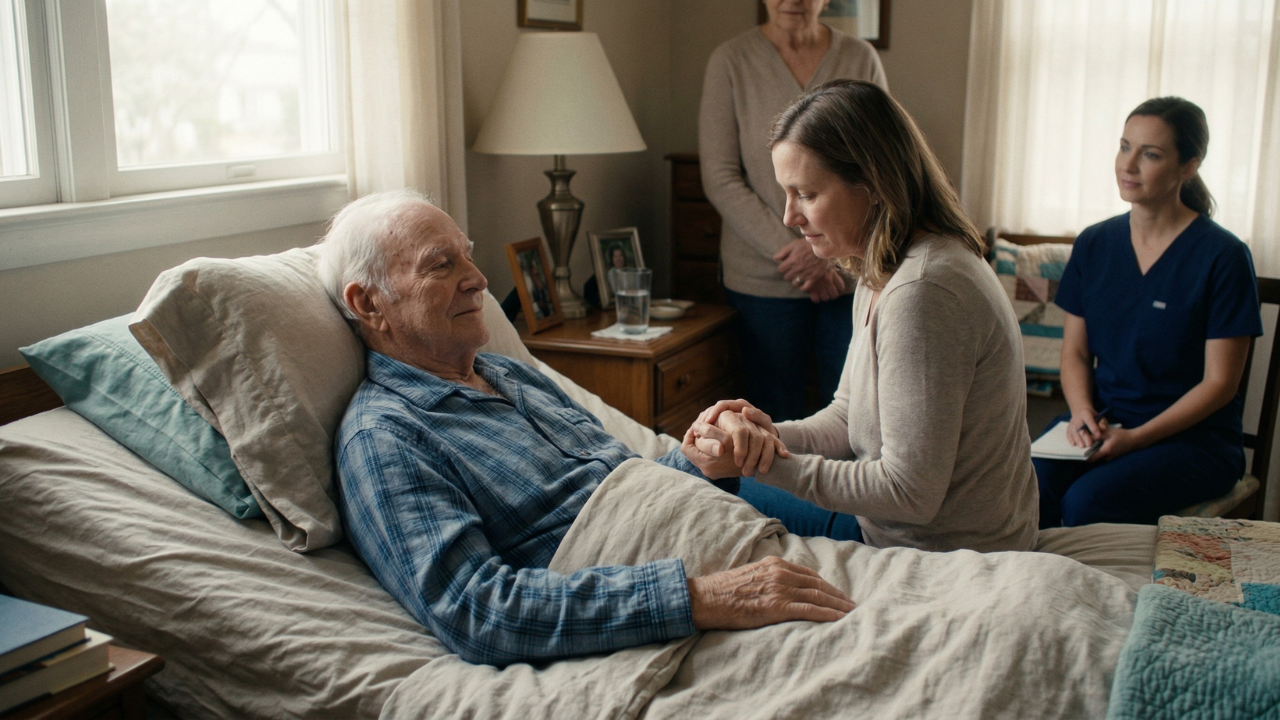
Parkinson’s disease is one of the most common diagnoses among people who receive hospice care in the United States. Yet many families caring for a loved one with Parkinson’s are not sure when hospice becomes appropriate, what it looks like for someone with this specific illness, or how to even begin that conversation.
At Bristol Hospice, we support patients and families navigating Parkinson’s disease at every stage. This article is intended to provide general information that may help families understand the later stages of Parkinson’s, recognize when hospice care may be worth exploring, and feel more prepared for conversations with their loved one’s medical team.
This is not medical advice and every person’s experience with Parkinson’s disease is different. Please consult your loved one’s physician or hospice care team for guidance specific to your situation.
What Is Parkinson’s Disease and How Does It Progress
Parkinson’s disease is a progressive neurological condition that affects movement, balance, and over time, many other body systems. It develops gradually and its progression varies significantly from person to person. Some people live with Parkinson’s for many years with manageable symptoms while others experience a more rapid decline.
In the earlier stages of Parkinson’s, symptoms typically include tremors, stiffness, and slowed movement. As the disease progresses, it often affects swallowing, speech, cognition, and the body’s ability to perform basic functions independently. In the advanced stages, Parkinson’s can significantly impact quality of life and the level of care a person requires.
Parkinson’s disease itself is not typically the direct cause of death, but the complications that arise in its advanced stages — including pneumonia from swallowing difficulties, falls, infections, and decline in overall body function — are serious and life-limiting.
When Is Hospice Appropriate for Someone with Parkinson’s Disease
Hospice care is appropriate for someone with Parkinson’s disease when the focus of care shifts from managing or slowing the disease to prioritizing comfort, dignity, and quality of life. This shift does not happen on a fixed timeline and it looks different for every family.
Hospice eligibility for Parkinson’s patients is generally determined when a physician estimates that the illness, if it follows its expected course, may limit life expectancy to six months or less. This determination is made by the patient’s physician in consultation with the hospice team and is based on the individual’s overall condition and rate of decline.
Families often begin asking about hospice when they notice a significant and ongoing change in their loved one’s condition. Some of the changes families commonly observe in advanced Parkinson’s that prompt this conversation include:
- Increasing difficulty swallowing food or liquids safely
- Significant and unintended weight loss
- Recurrent pneumonia or respiratory infections related to swallowing difficulties
- Increasing falls or an inability to stand or walk without substantial assistance
- Significant cognitive changes including dementia, confusion, or hallucinations
- A marked decline in the ability to perform daily activities even with help
- Increasing time spent in bed or a chair rather than being mobile
- A shift in the patient’s own goals toward comfort rather than continued aggressive treatment
If you are seeing several of these changes in your loved one, it is worth having a conversation with their physician about whether a hospice evaluation makes sense. Asking this question is not giving up. It is advocating for your loved one’s comfort and quality of life.
What Hospice Care Looks Like for a Parkinson’s Patient
Hospice care for someone with Parkinson’s disease is focused entirely on comfort, symptom management, and supporting the whole person and their family. It does not mean withdrawing care. It means redirecting care toward what matters most at this stage of the illness.
For Parkinson’s patients, hospice care typically addresses:
- Pain and discomfort management including muscle rigidity and stiffness
- Support for swallowing difficulties and related nutritional concerns
- Fall prevention and safety support within the home environment
- Management of anxiety, depression, or agitation which are common in advanced Parkinson’s
- Support for sleep disturbances and other non-motor symptoms
- Guidance and education for family caregivers on what to expect and how to provide care
- Emotional and spiritual support for the patient and family
- Bereavement support for family members after the patient passes
Hospice care is provided wherever the patient calls home. For most Parkinson’s patients this means care at home, though hospice can also be provided in assisted living communities, skilled nursing facilities, and inpatient hospice settings.
Why Families Often Wait Too Long to Call Hospice for a Parkinson’s Patient
One of the most consistent things hospice care teams hear from families of Parkinson’s patients is that they wish they had called sooner. There are several reasons families tend to delay.
Parkinson’s progresses gradually and it can be difficult to identify a clear turning point. Because the disease does not follow a sudden or obvious trajectory the way some other terminal illnesses do, families often find themselves managing one day at a time without stepping back to assess the overall picture of decline.
There is also the emotional weight of what calling hospice feels like. Many families worry that reaching out to a hospice organization means they are giving up on their loved one or accepting an outcome they are not ready to face. This is a deeply human response. But hospice care is not about giving up. It is about ensuring that a person’s remaining time is as comfortable, dignified, and meaningful as possible.
Research consistently shows that patients who enroll in hospice care earlier experience better symptom management, fewer emergency hospitalizations, and more time in a comfortable and familiar environment. Families also report feeling more supported and less overwhelmed when hospice care is part of the picture.
How to Talk to a Loved One with Parkinson’s About Hospice
Having the conversation about hospice with a loved one who has Parkinson’s disease is one of the hardest things a family can do. It requires honesty, compassion, and a willingness to talk about things that most families have spent years avoiding.
Some general approaches families find helpful:
- Choose a calm and private moment when neither you nor your loved one is rushed or distressed
- Start by asking what your loved one is experiencing and what matters most to them right now
- Be honest about what you are observing and why you want to explore hospice as an option
- Frame hospice as a way to ensure comfort and support rather than as an ending
- Involve the patient’s physician if that feels like a more comfortable starting point
- Allow your loved one to express fear, grief, or resistance without trying to immediately resolve it
If your loved one has cognitive changes related to Parkinson’s that affect their ability to participate in this decision, your hospice care team can guide you through how to proceed in a way that honors their dignity and known values.
The Role of the Hospice Team in Parkinson’s Care
Hospice care is provided by an interdisciplinary team that supports both the patient and the family. For a Parkinson’s patient this team typically includes a registered nurse who visits regularly to assess and manage symptoms, a hospice physician who oversees the care plan, a social worker who provides emotional support and helps with practical concerns, a chaplain or spiritual care provider for patients and families who want that support, home health aides who assist with personal care and daily comfort, and volunteers who provide companionship and additional support.
Bristol Hospice teams are experienced in caring for patients with Parkinson’s disease and understand the specific challenges this illness presents for patients and the people who love them. Our goal is to ensure that every patient experiences the highest possible quality of life for the time they have and that every family feels supported through every step of the journey.
Is It Too Early to Call Hospice for My Loved One with Parkinson’s
It is almost never too early to have a conversation about hospice. Calling a hospice organization does not mean your loved one will be enrolled immediately or that the decision is irreversible. A hospice evaluation is simply a conversation — an opportunity to understand what is available, what the criteria are, and whether hospice is the right fit for your loved one’s current situation.
Many families find that even if their loved one is not yet eligible for hospice, having that conversation helps them feel more prepared and less alone in what lies ahead. And when the time comes, they already have a trusted relationship with a hospice team that knows their family.
If you are not sure whether it is time, that uncertainty itself is a reason to reach out. Bristol Hospice care teams are available to answer questions, provide information, and help families think through their options without pressure or obligation.
Frequently Asked Questions About Parkinson’s Disease and Hospice Care
Is Parkinson’s disease a terminal illness?
Parkinson’s disease is a progressive and life-limiting condition. While it is not typically the direct cause of death, the complications that arise in its advanced stages are serious. Many people with advanced Parkinson’s are eligible for hospice care when their overall condition meets established criteria.
When does Parkinson’s become eligible for hospice care?
Hospice eligibility for Parkinson’s patients is generally considered when a physician estimates that the illness may limit life expectancy to six months or less if it follows its expected course. This is determined based on the individual’s overall condition and is evaluated by their physician and the hospice team.
Can someone with Parkinson’s receive hospice care at home?
Yes. Most Parkinson’s patients receive hospice care at home, though care can also be provided in assisted living communities, skilled nursing facilities, and inpatient hospice settings depending on the patient’s needs.
Does choosing hospice mean stopping Parkinson’s medications?
Not necessarily. Hospice care focuses on comfort and symptom management. Medications that contribute to a patient’s comfort and quality of life are typically continued. Your hospice physician will work with your loved one’s care team to determine which medications are appropriate as part of a comfort-focused care plan.
What is the difference between palliative care and hospice care for Parkinson’s patients?
Palliative care can be provided at any stage of a serious illness alongside curative or disease-modifying treatment. Hospice care is a form of palliative care specifically for people who are no longer pursuing curative treatment and whose focus has shifted fully to comfort and quality of life. Both focus on symptom management and supporting the whole person.
How do I know if my loved one with Parkinson’s is ready for hospice?
There is no single moment that marks readiness. Families often begin exploring hospice when they notice a consistent decline in their loved one’s condition, increasing difficulty with swallowing or mobility, recurrent infections, or a shift in the patient’s own goals toward comfort. Speaking with your loved one’s physician or calling a hospice organization for an evaluation is always a reasonable next step.
You Do Not Have to Navigate This Alone
Caring for someone with advanced Parkinson’s disease is one of the most demanding and emotionally complex experiences a family can face. The physical demands of caregiving, the grief of watching a loved one change, and the uncertainty of what comes next can feel overwhelming.
Hospice care is not just for the patient. It is for the entire family. When Bristol Hospice comes alongside a family navigating Parkinson’s disease, the goal is to ensure that no one is carrying this alone — that every person in that household has access to support, education, and compassionate guidance through every stage of the journey.
If you have questions about hospice care for a loved one with Parkinson’s disease, we encourage you to reach out. There is no obligation and no pressure. Just answers from a team that understands what your family is going through.
Learn More About Bristol Hospice Care for Parkinson’s Patients
Bristol Hospice provides compassionate hospice care across 78 locations in 25 states. To learn more about how we support patients with Parkinson’s disease and their families, visit bristolhospice.com or talk to our care team today.
This article is for general educational purposes only and does not replace guidance from your loved one’s physician, neurologist, or hospice care team. Every person’s experience with Parkinson’s disease is unique. Please consult qualified medical professionals for advice specific to your loved one’s situation.
Bristol Hospice Cares — Explore Our Blogs
Can I Be a Hospice Volunteer?
Published on July 12, 2026 in the Resource Category

What Hospice May Provide at Home
Published on July 9, 2026 in the Resource Category

Hospice care at home may include team visits, medications, equipment, supplies, and caregiver support related to the hospice diagnosis and plan of care. Bristol Hospice explains what loved ones may expect and why every care plan is different.
